
I keep adjusting the year in which my near-future cli-fi fantasy novel is set. Firstly, because novel writing is a much longer process than I’d naively anticipated almost a decade ago, so ‘near future’ is in fact, now. And secondly, because the world in which I’ve set my novel is meant to be slightly futuristic in an apocalypse if we don’t act now kind of way – but every time I look up from my writing, it’s coming true.
I shouldn’t be surprised. There’s a reason climate change is something I’ve been anxious about for half my life (or more, if you count my very normal childhood obsession with Captain Planet and pals). David Suzuki’s ‘The Sacred Balance’, a book I fixated on in my last year of high school, but that was published well before that, was all about how it was already almost too late to reverse the devastating effects of climate change. And here I sit, a decade later, and we still haven’t done anywhere near enough about it; in fact, it’s just getting worse. Our farmers are experiencing the worst drought in centuries. Our entire country was on fire, then flooded, in the space of months. And now, a pandemic. And while I know that pandemics aren’t a result of climate change, they’re still uncomfortably apocalyptic, and parallels can be drawn between the two. The point is, I like my apocalypses to be fictional, not current affairs.
At times, these calamities are recipes for anxiety and depression. How can I delve into this fictional world, which used to be a form of escapism, when the real world around me feels like it’s imploding? I don’t want to write about a world where humankind is on the brink of destruction. I don’t want to write conflict; you know, that thing that keeps people interested in a story? No. I want to write puppies and rainbows. Puppies that lick rainbows and then get the cute puppy sneezes and everyone lives happily ever after.
But then I remember that my novel isn’t meant to be an all out dystopia. Sure, there are no puppies licking rainbows, but it’s not all bad. Yes, it’s part of a series that will ultimately be pretty apocalyptic. But it’s pitched at YA audiences. It isn’t meant to be an unhappy, the world is screwed kind of ending. There’s meant to be hope. And this is the key to my tips for writing post-apocalyptic fiction, while still existing in a real world full of climate emergencies, natural disasters, corrupt politicians, poverty, and global pandemics.
Tip #1: Keep a journal
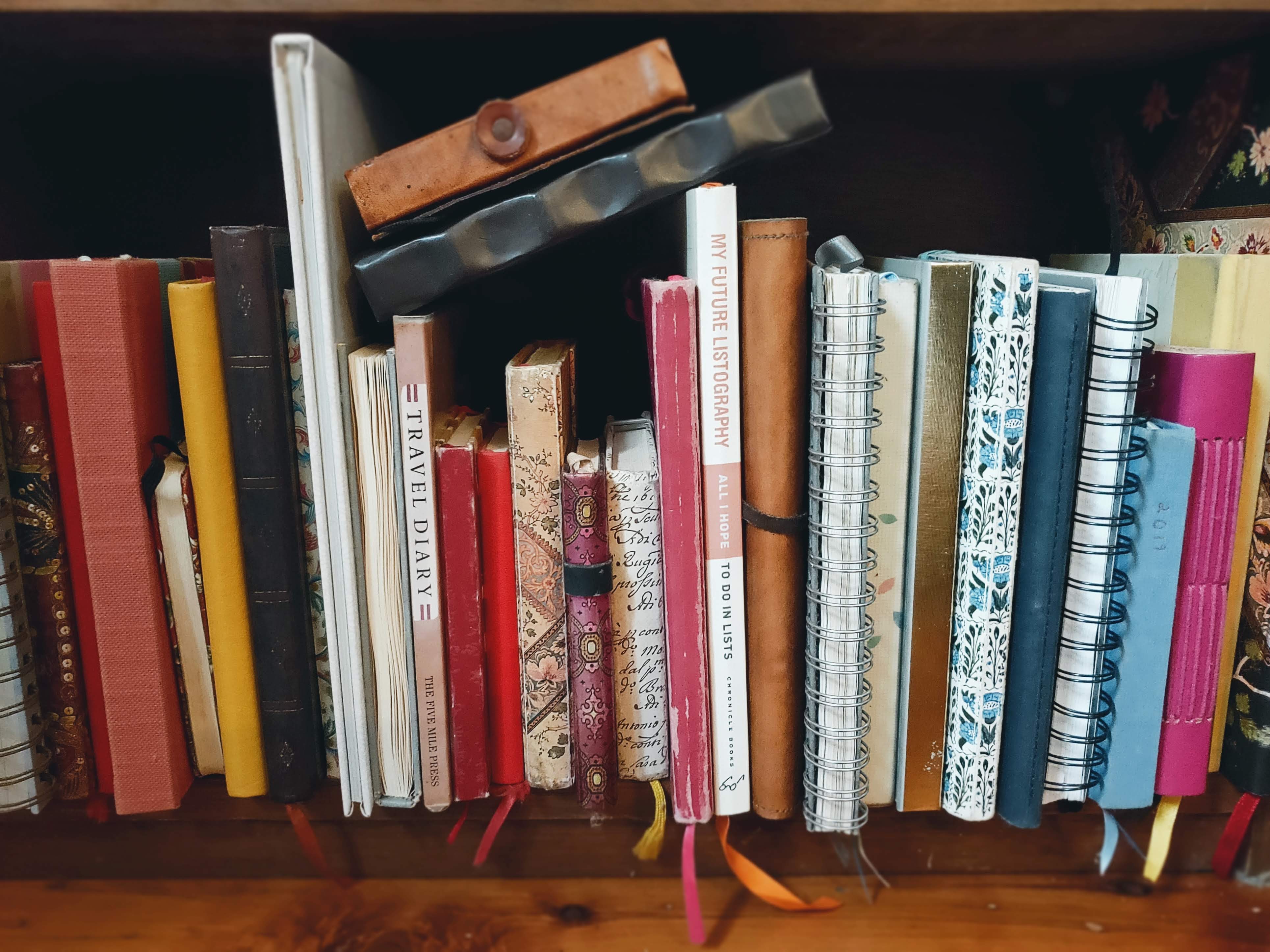
I know that some people cringe at these words, but hear me out. One day, these journals – or blog posts, or Twitter feeds, or whatever your chosen method of documentation is – will be primary sources in some future writer’s research projects and history books (or in-built computer chip brain newsfeeds, whatever) that explore what it would be like to live through a pandemic. The repercussions of the coronavirus pandemic are, of course, recorded all over the internet, and by media outlets around the world. Already, there are countless articles and podcasts and news reports about it, Twitter feeds and memes and WhatsApp groups, ‘wash your hands’ campaign posters and frightening video footage.
But that stuff is the dressing to a fiction story (the complex, rich and aromatic dressing, but dressing nonetheless). That stuff sits under categories like world building, context, scene setting. At the end of the day, it’s the experiences of characters that make stories interesting. It’s the personal. The feelings. Most of us can at least imagine the horrors of living through war, not just because we’ve seen photos, and propaganda posters, and official documentation, but because we’ve read people’s personal accounts. When world-changing things occur, the humans of the future want to learn about them, and learn from them. What we want to know most, I think, is what the experience of individuals was. We want to connect, whether the characters in the stories we read are fictional or not. Perhaps recognising this, the National Museum of Australia has already set up a Facebook page for people to record their experiences of it all; we’re right in the midst of it, and they’re thinking forward – as many are – to when this is all over, and we’re all elderly or gone, and our kids’ grandkids are being regaled with stories of this time (hopefully having experienced nothing of the sort themselves).
And while all of that is worthwhile, I’d still suggest journaling, first and foremost, over more public avenues of writing your feelings (though of course, these can be helpful and cathartic and keep us socially connected in a time where it’s more important than ever). A personal journal gives you the privacy to truly write what you’re thinking and feeling, without having to worry that you’re going to offend, hurt, or upset someone else.
Writing your feelings – your actual, true feelings – can be hard to do. Usually, when I’m feeling my absolute lowest, and most overwhelmed, the last thing I want to do is write about it. I want to do anything other than think about my feelings. I want to run really far, really fast. I want to play loud music and scream into a pillow. I want to grit my teeth and clench my fists really hard and stare through walls until something changes. But other times, usually when I’ve taken a moment or two to begin processing what I’m feeling, journal writing can be extremely cathartic. Writing what you’re feeling, or even just your everyday experiences while physically isolated, or social distancing, or losing your job, or loved ones, or trying to take care of children who don’t fully understand why they’re not at school, is worthwhile. It can get some of the existential crises, and the grief we’re bound to be having, off our chests. Then later, when the dust settles, it can also make for extremely poignant inspiration for your fictional characters, as they face their own apocalyptic challenges. The reason I like reading and writing in these kinds of genres is, I think, because I like knowing what humanity is capable of; the very worst, but also, the very best. Writing is about our shared human experience, and meaningful writing draws on the terrible times, just as much as the good times.
Tip #2: Stay informed… in moderation
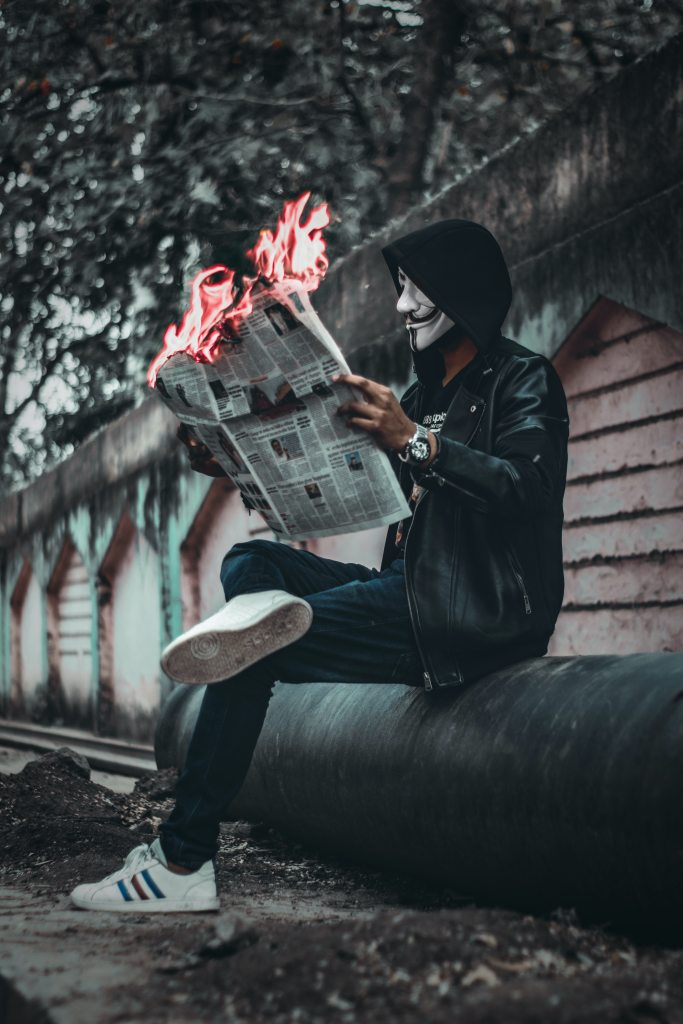
Australians are now a month or so into the direct impact of the coronavirus pandemic, depending on their connection to the rest of the world, and their personal experiences in their closer friendship, family and community bubbles. Already, most of my friends have strict rules around how frequently they check the news, and how they interact with social media. It can be extremely anxiety-inducing, even debilitating, to constantly be bombarded with catastrophic news as the world around you continues to change in ways that most of us have never before experienced. It’s hard to toe the line between blissful ignorance, and stress-inducing media saturation. We need to know what is going on around us. It’s serious, and lives genuinely depend on everyone around the world working together right now. But we don’t need to check our phones every time there’s an updated coronavirus related headline. If we do that, we won’t be able to function.
Personally, I watch ABC news in the morning (preferably after exercising and making breakfast), for no more than an hour, then I try and reserve phone time for keeping in touch with friends and family. I have to constantly remind myself that social media just before bed isn’t helpful for me. This is all made much easier now than it was a few days ago and last week, by the fact that my workplace is no longer operating, and it’s not currently my responsibility to make sure we’re following COVID-19 related business protocols. Some days, it’s easier than others. Mainly, when I’m just following the advice to stay at home unless you have to leave for one of four essential reasons, I don’t need to know precisely every development. I’m grateful for that. These clear directives are helpful in times of so much uncertainty, and even acknowledging that, is helpful world-building for my writing. When I’m not feeling overwhelmed, it can be interesting to research all the different ways countries and governments around the world (or even on a smaller scale, individual communities) have been handling these dilemmas.
There will be an increased sense of authenticity to everyone’s post-apocalyptic writing – or even just the general writing of conflict – because of living through this, if you’re able to keep it all from becoming overwhelming. Taking stock of what’s going on in the world around you, in moderation – whether for you that means a little bit of staying informed each day, once a week, or burying your head in the sand for a while and popping out on the other side – will help your writing do what it’s meant to do, which may or may not be one of these things:
“The purpose of a writer is to keep civilization from destroying itself.”
Albert Camus
“To survive, you must tell stories.”
Umberto Eco
“I write entirely to find out what I’m thinking, what I’m looking at, what I see and what it means. What I want and what I fear.”
Joan Didion
Tip #3: Take note of the good that comes from the bad

The moments that I think I’ve been happiest, or most relieved, or most grateful, throughout this whole crisis, have directly followed those times when I’ve felt lowest. Think of it like the climax of many of your favourite novels and films, where you’re biting your nails (or not, because c’mon amigues, that counts as touching your face) and yelling at the pages/screen ‘no no no no no, if that character dies I’m book burning/throwing my TV out the window’ (you guys don’t do that? Just me?) because you’re just that invested in the outcome, and things have gotten REAL BAD, and then… success! The MC triumphs! The relief is that much more palpable, because there was just so much at stake.
We’re living in those times right now. We know what’s at stake. Lives are at stake. Livelihoods. But all over the world, people are supporting each other, and triumphing in the face of anxiety and fear and even death. Thanks to the tireless efforts of essential staff, including our medical professionals, people are surviving. Thanks to the community banding together to stay at home whenever they can, countries are controlling – slowly, but it is happening – rates of infection. And on a much smaller (but no less important) scale, friends are supporting friends. Families are taking care of one another. Random strangers are showing kindness in all kinds of ways (check out #thekindnesspandemic on Facebook). People are creating beautiful, giggle-inducing, excellent memes and cartoons and paintings and poetry and videos and performances from the cosy warmth of their own homes. If you can channel some of these moments into your novels, your apocalyptic story will be one of hope, and not despair.
Honing in on the complexity and simplicity of these truly human moments, and describing your main characters supporting their loved ones, or creating something, or noticing a butterfly while they’re face down in the mud, or whatever it is they need to do, after their lowest of low points, is what’s going to make your writing come to life.
Life is crazy difficult right now, and changing all the time, but it’s also at its richest. It’s why people have that stupid saying that you never want to hear when you’re feeling shite: “Don’t worry, it’ll be character building”. But it really will be. It’s often in times of greatest despair, that humans become their most generous, and compassionate, and empathetic, and at the moment, that’s the kind of apocalyptic fiction I’d like to write and read.
Love you. Keep writing.
 Samantha Todd
Leave a comment