Until this week, I’ve been able to trick myself into believing that I’m still on holidays, and that everyone else in Australia is, too. But it’s back to school, and the farce is over. The year has officially begun. And it’s got me in a funk.
Back in the good old days (last week), I had plenty of time to write, but didn’t feel any immediate pressure to do so. I could spend a full day and evening writing, with beach trips and reading breaks in between, and give myself a huge pat on the back for working when I didn’t really need to be working. Then I could sleep in the next day, and not write anything at all, and still give myself a huge pat on the back, just for ‘taking time to myself’ or ‘enjoying the fresh air’. Because after all, it was so hot that day. What else was I expected to do?

Then this week came along, and the last few remnants of people who were still living in the blissful holiday world I was in (never mind the parents who are sharing GIFs about how thankful they are to be rid of the kids), were forced to return to reality. Everyone is now back at work, or school, or gearing up for uni . . . except me. I’m stuck in limbo, because I’ve decided to spend another year away from the consistency and routine of a full-time job. I don’t have to go back to school or work (one and the same for me, as an English teacher). But I could. It’s just that I’ve decided not to. And this is a good thing. Right?
Exactly. I mean, this really isn’t something worth getting in a funk over. “You don’t have to go back to work, and it’s making you feel anxious?” I hear you say, arching one eyebrow and staring me up and down, wondering if I also poop gold and then complain about how uncomfortable it feels.
I get that. It is a bit ridiculous. I’m lucky enough that, for the second year in a row, I’ve worked out a budget that means I can still pay all my bills, while working as an aerial instructor in an evening job that I love, and maybe only two or three days a week of casual teaching. The rest of the time, I can dedicate to writing my novel. I don’t have any other responsibilities, like kids and a mortgage, to worry about. I’ll still have a little bit in savings at the end of the year. I’ve been telling myself this, yet still, the funk remains.
See, now might be my only opportunity to do this. Most people never get this opportunity. Most people continue to work full-time their whole lives, and squeeze a bit of writing out in between their day job. Even if they’re lucky enough to sell some books, it’s nowhere near enough to support a family or pay a mortgage. For a ‘here’s the harsh reality’ example of this, take a look at Annabel Smith’s post where she candidly explains how much she earns as a writer. Or, read the Sydney Morning Herald article that cites a survey completed by Macquarie University, suggesting that on average, Australian writers earn $12,900 annually.
So, while I feel so thankful and grateful that I am in a situation where I can – for now – afford to spend a few days a week trying to create a career out of writing, I can’t help that anxious feeling in the back of my mind, spurred on mainly by thoughts like:
a) This is a financially terrible idea and I should be saving money while I can, because the housing market is a shiny golden haven that only the mega-rich can enter and I’m going to have to live in a cardboard box and never see any other country in the world again because travelling the world is a silly Gen-Y pipe dream.
b) The pressure is on. It’s highly unlikely that you’ll make it as a writer, but if you have any hope at all, then you have to get it right, right now. You’ll never have the opportunity again.
These thoughts are more prominent this week, because I feel like it’s my last chance to change my mind. School has started, so if I want more regular work, I need to say so now. And if I want to do casual work, I need to start applying.
Actually, this isn’t entirely true. I’ve had colleagues at my previous school offer me work, but I’ve turned it down, because this year, on top of wanting to pursue my writing career, I also want to experience a different school, so that even my part-time teaching is a more fulfilling experience, because otherwise I fear that I’ll be one of many early career teachers who leaves the profession altogether. I’m reluctant to admit that I think I’ve outgrown my previous workplace, and I’m up for a change. This isn’t the easiest or quickest way to earn money. And it isn’t really about focusing on my writing, either. It’s about keeping my options open, in case of failure. I want to know that I’ve really given teaching a shot, and that I’ve experienced it at different schools. This isn’t necessarily the hardest decision, nor is it the easiest option, but it’s the most fulfilling one.
As I write, I’m realising that this is the crux of the matter: I’m in a funk, because I’ve made a decision to put fulfilment before money, and I’m judging myself for it. I’m also worried about the judgment of others. This kind of decision – to follow a passion rather than doing what is perhaps more sensible and logical – is at odds with the way most ‘proper adults’ live their lives, in my anxious little mind. It’s the norm to get a full-time job, whether you particularly enjoy it and are passionate about it, or not, right?
The Australian Psychological Society (APS), has commissioned a “stress and wellbeing survey” for five consecutive years now. The most recent results are from the 2015 survey, and they suggest that Australians are experiencing lower rates of work place wellbeing and work-life balance than they were five years ago. Workplace issues and personal financial issues remain some of the most prevalent stressors. I don’t want to be one of those statistics.
But if you don’t really enjoy your work, you can get pleasure in other things; loved ones, family, buying a house, travelling. Those things will happen in and around your stressful full-time job, and they’ll provide you with a sense of fulfilment. Hopefully. Unless this is just another kind of funk.
There are all kinds of funks one might find oneself in. And you know what? That’s okay. It’s a pretty common human experience to sometimes feel sad or anxious, without a wholly logical and justifiable reason. We’re complex beings. Life can be really easy sometimes, and sometimes it can be really hard. We won’t necessarily feel happy and sad accordingly. In fact, sometimes it’s happy, sad, easy and hard, all at the same time, and for no apparent reason.
I’m only able to come to this mindset through a few days of reflection, and confusion, and a lot of great advice. Ironically, it actually seems like one of the ways I’ve clambered out of my funk (man, I really love that word) is by writing; the very thing that got me into the funk to begin with. There are also some other things that have really helped me out, and I’d like to share them with you, in case you ever find yourself in a similarly funky situation.

Ways to get out of a funk:
1. Ignore it for 5 minutes. If you’re in a funk, pretend that you’re not. Think about whatever it is you’re meant to be achieving that day, and for five minutes, just go for it. This is pretty well known advice (through a cursory Google search, I found articles on it here, here and here), but I had a timely reminder while in my funk, that if you don’t feel motivated, spend just 5 minutes on the task, and see if it goes further than that. I sat down to write for five minutes, and stayed at my desk for 2 hours. It wasn’t great writing, but it was a little bit better than nothing, even if I didn’t realise it at the time.

2. Get some fresh air. Leave your house. You have to do this. This is advice that’s easily given, but hard to follow sometimes, especially when you feel like you should be doing something else*, and it’s stinking hot outside. Leaving your house will help, I swear. And if it doesn’t, at least you tried it.
3. Stop saying ‘should’. *On that note, ‘feeling like you should be doing something else’ is dangerous. I had some great advice from a friend, who has a newborn. Her paediatrician told her to stop saying should. It’s a horrible word. There’s nothing you ‘should’ be doing. You’re doing everything right. No more ‘should’. Great advice for a first time mum, but also great advice for someone who is beating themselves up for not writing or working enough each day. If you’re trying your best, you’re doing it right.
4. Talk to a friend. “Do you want me to come over and have a ribbon cutting ceremony and buy you some new stationery, so it feels like you’re officially starting work again?” another friend suggested. Other than the fact that she knows I love ribbons and stationery, because these women with their wise words know me better than I know myself, this was such a good reminder that I don’t need to worry about not going back to work. In fact, I am going back to work, and I’ve been ‘back at work’ all holidays. I’ve been working on my novel consistently all year.

Some days I’m researching, or building my author platform, or just thinking about characters. Other days I’m writing. But none of that time is wasted, even if it can often feel that way. It’s the lack of an official return to work date, which makes me feel a bit lost. Writing a novel can be a lonely process as well, and as someone who has always thrived on feedback, getting stuck is particularly challenging when there’s no one around to tell you to keep going and that you’re doing a good job.
5. Get professional feedback. When I say professional, I mean from someone with industry experience. Although, if that isn’t an option, just getting a fresh set of eyes to have a look at your work can be excellent, too. The best way to do this is to sign up for a course, or manuscript assessment. From personal experience, I highly recommend AWC’s ‘Write Your Novel‘ course.
6. Join a writer’s group. Or if your funk is unrelated to writing, join some other kind of group of people, outside of your immediate workplace, that are in the same situation. This is especially important as a writer, because as I said, it can be lonely work. All day, you’re stuck with your own thoughts and characters you’ve invented. You know your work so well that it is consuming everything. Take a break. Get a fresh perspective.
Facebook writers’ groups are great. I’m a part of one run by Valerie Khoo and Allison Tait, connected to the AWC’s ‘Build Your Author Platform‘ course, another one I highly recommend. I’m also starting to explore the lists function on Twitter (thanks for helping me discover this, Marie Mclean), which is essentially Twitter’s equivalent of making a group on Facebook. These groups are a helpful way of finding other Australian writers who are in similar situations to me, making me feel a little less isolated, even if we’ve never met in person! Though, I hear that in-person writers’ groups are also excellent, if you’ve got the time for them.
7. Get some perspective. I’ve been reading Six Months in Sudan by James Maskalyk, a book about his experience working as a doctor in Abyei, a war torn town in the middle of Sudan. Every day, he sees starving children and people dying from preventable and curable diseases. It’s pretty hard to feel sorry for yourself when you’re reminded that these kinds of experiences are happening in the world, right now.
8. Have a cuddle with a loved one. The first day I was in a funk, my partner could tell as soon as he got home. He knows me too well, and I’m not exactly awesome at hiding my emotions. He gave me a hug, and he listened, and he distracted me, and made me a Moscow mule… and I felt better. The next day I was still in a funk. I called my mum, had a cry to her, and she gave me 101 suggestions for how to feel better, then told me to come over if I wanted. After much debate, I followed some of her suggestions. Mum suggestions are obviously so extensive (they’re professional comforters, after all) that I could dedicate a whole post to them. Instead, I’ve just included some of them below.
9. Turn on loud music and do housework. Let the music distract you from your cyclical thoughts, and go around and actually do all those things that you usually ban yourself from doing because they’re lorded as procrastination. Sometimes, procrastination can be a good thing. If we’ve cleaned up the house or sorted our email inbox or just dealt with whatever other things loom over us, our minds are clear to figure out what it really is that is making us feel anxious. We can cross off a whole list of things that couldn’t possibly be contributing, because we’ve dealt with them. And everyone loves a good list.
10. Go for a swim and drink a smoothie. While I was in a funk, it was seriously hot outside. It’s hard to feel great when you’re sweaty and irritated and probably haven’t had enough water. Drinking a smoothie that your mum has made for you can solve a surprising number of problems (you can tell that my mum is a nurse; she’s totally in her element when looking after me, something for which I’m extremely grateful).
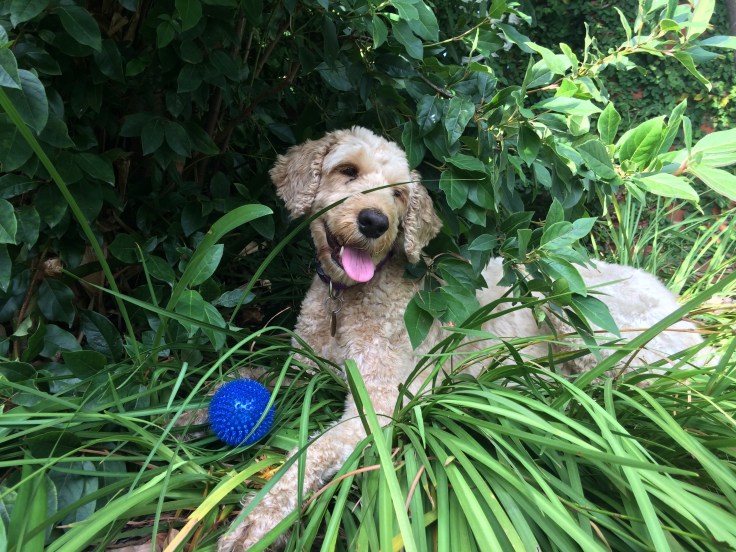
11. Hang out with a dog. There is nothing better in the world for curing all problems than your dog. There’s research on this. But if you don’t believe it, just try getting a dog. It’s truly impossible to feel sad when your dog is so ridiculously excited to see you and hang out with you and catch a ball and run backwards and forward and all the simple pleasures in life. Maggie, my dog on the right here, is the best funk cure in the world.
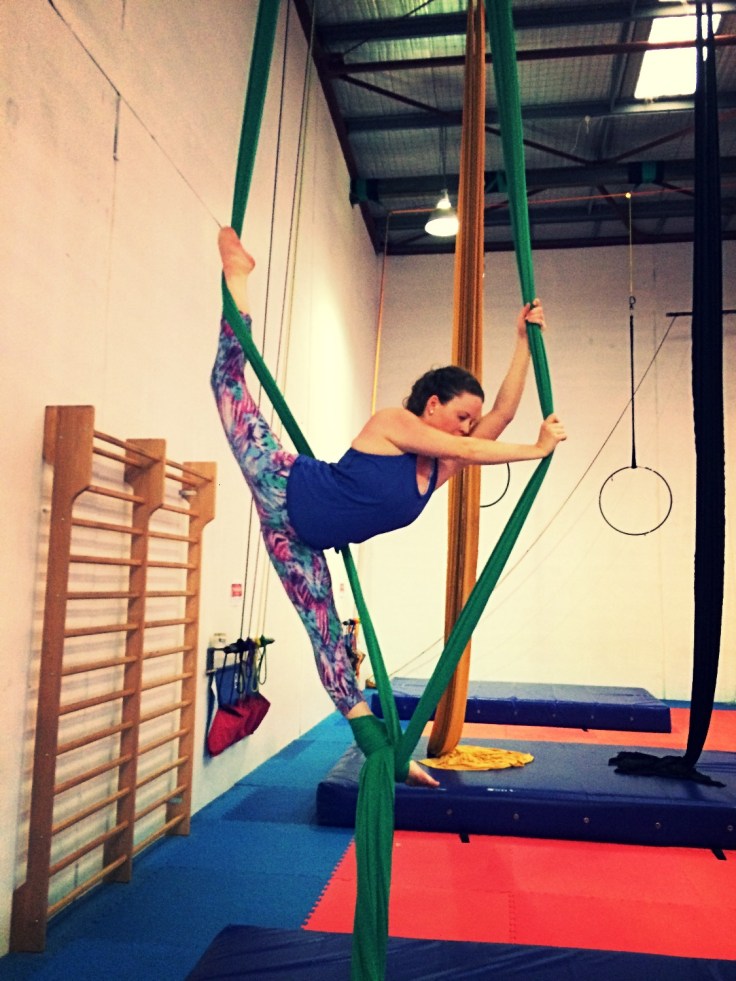
12. Exercise. Endorphins are pretty magical. So exercise hard enough that you actually get that head rush and feel your heart race. I read a blog post recently by Tess Woods, a writer from Perth, where she laments forgetting to take care of her body after becoming a writer, and it really cemented this idea that it’s important for your mind as well as your body, to stay active!
13. Help someone else. There’s no better feeling than helping someone else with something. If you’re making someone else feel good, it makes you feel good. My funk officially ended last night, when I taught a silks class (physical activity – check!) and helped one of my lovely students to do a drop that she’d previously disliked, in a new way that made her feel on top of the world. She looked like a showgirl, all smiles and glamour and happiness, and I was so proud of her. Win-win situations all around.
Mindset is a really big thing. If you’re in a funk, you’re ultimately the only person who can get yourself out of it. These suggestions are just things that I’ve done for myself, and they mightn’t work for you. But they might. So while this whole introspective, slightly self-obsessed process has lead me to walk right out the other side of my funk, I think I’ll bookmark this post for later, just in case I ever get stuck there again.
I welcome you to do the same, or even better, comment below with your tried and true methods of unfunking.
 Samantha Todd