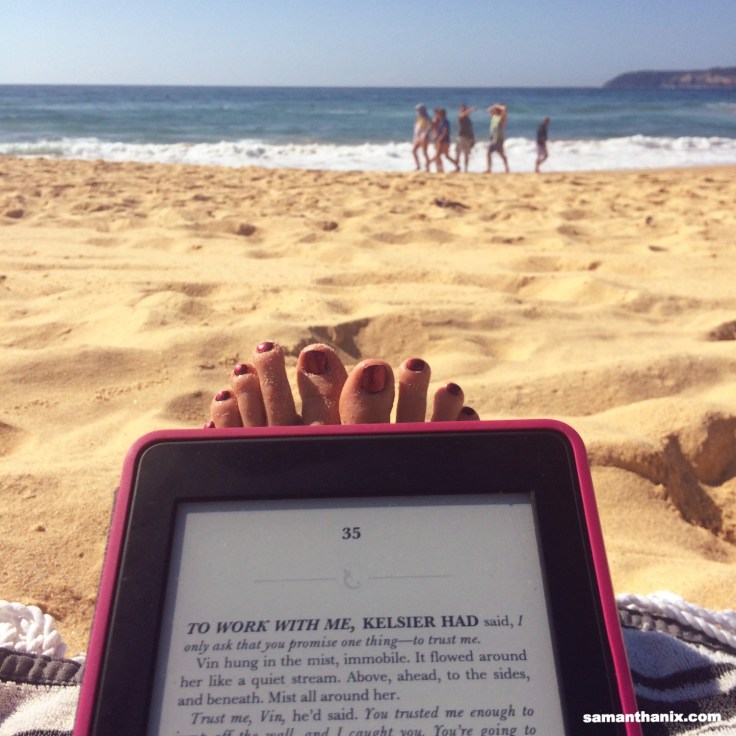
It’s a truth universally acknowledged that as soon as you dedicate time to writing, and teaching others to read and write, you will suddenly have so much less time for your own reading. When I was completing my teaching degree, one of my English tutors specifically said that it was entirely unacceptable to be a high school English teacher, without reading at least one book – outside of those you’re teaching – a month. This seemed like great advice. And then I started working full time and juggling my evening job as an aerial silks instructor, and I couldn’t even remember what reading for leisure involved. Even when I wasn’t working full time, it seemed like a difficult ask – after dealing with kids all day, then teaching both kids and adults in the evening, all I wanted to do when I got home was to shove food in my mouth and zone out in front of Game of Thrones. The television series. Not the books, alas.
This summer, I kicked those bad habits, and I’ve been making sure to read every day, at least for an hour, usually longer. I feel like a new person. Or, like my old self, actually. The self that was calmer, more inspired, more excited… the self that actually decided that I wanted to be an author. So firstly, I’ll repeat my tutor’s very important advice: always read for leisure. This isn’t something you can ever give up. Even if, for a while, you have to force yourself to do it, you’ll thank yourself later. There’s nothing quite like a good book to make you remember the important things in life. So, here’s a quick review of the books I’ve been engrossed in this summer, in the order in which I read them.

1. Library of Souls: the Third Novel of Miss Peregrine’s Peculiar Children, by Ransom Riggs
I thoroughly enjoyed all the Miss Peregrine novels. Basing stories on kooky old photographs is a unique and interesting idea, but more importantly, the storyline was fast-paced, with characters (young, old, and both at the same time) that mattered and had histories and voices all of their own. Word of warning – though I’m usually not a very harsh critic when it comes to film adaptations, the film version of the first of Miss Peregrine’s novels doesn’t even remotely do justice to the book, so don’t use it as a guide for whether or not you should read the trilogy. The film sold itself short by changing the storyline far too much, and by making the kick-arse heroine a more sedate and docile character than she should be. The characters are perfect, exactly the way they are, in the book.

2. Smarter Faster Better by Charles Duhigg
I don’t often read self-help books, but this one popped up on my Kindle and I thought I’d give it a go. Though I’ve seen lots of praise for how interesting this writing is compared to other similar life hack/business advice books, sometimes I think that these kinds of books could use a quick lesson from Mark Tredinnick’s The Little Red Writing Book. Just because you’re writing non fiction doesn’t mean it should read like a psychology essay. I think it could have been a quarter of the length with the same interesting case studies and important lessons, but at least Duhigg is clearly passionate about what he’s writing. A fun read (skim the boring bits!) and some great points to help me understand motivation and set long term goals.
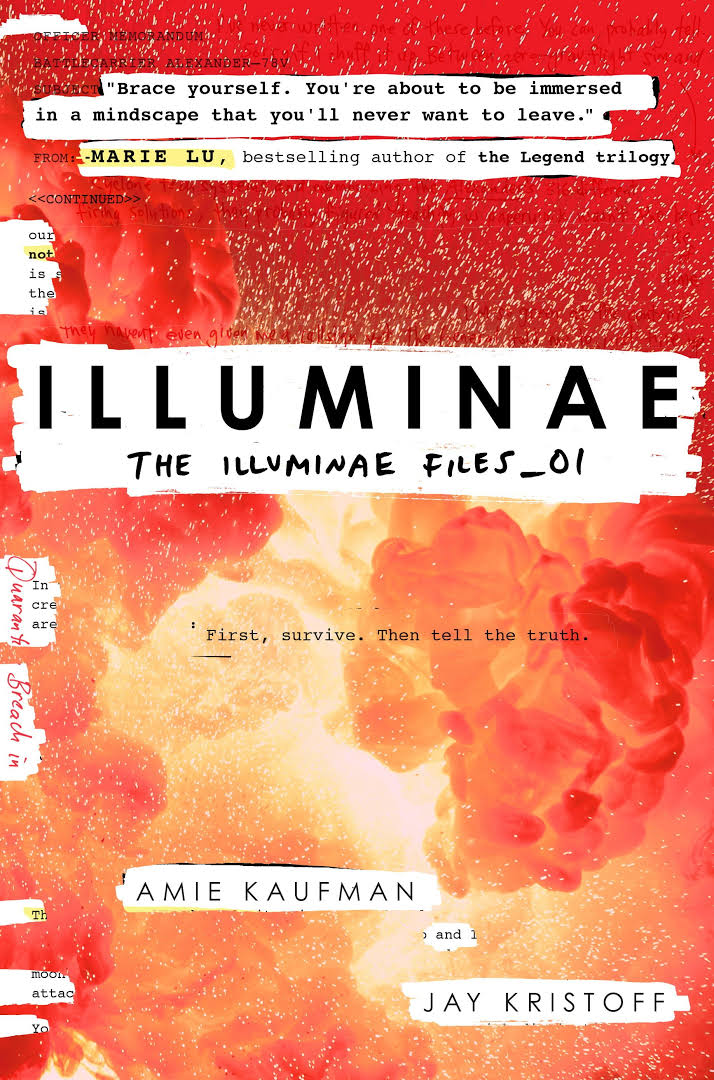
3. Illuminae by Jay Kristoff and Amie Kaufman
Illuminae was the first I-cannot-put-this-down book I’d read since the Patrick Rothfuss’ Kingkiller Chronicles. It was the book that spiralled me back into a giddy whirlwind of YA and fantasy reading. I used to think the words ‘space opera’ or ‘space cowboys’ were an immediate turn off. But then I watched Firefly. So when I saw Jay Kristoff on a panel at the Sydney Writers’ Festival in May, talking about his space-dystopia, I wasn’t so scared to try it. Absolutely stoked that I did. It was epic and exciting and full of twists and turns and I spent most of the time reading it swearing, then swearing again louder, then louder again, as things I thought couldn’t get worse got way worse. Love the female main character. Love the twists and turns and edge of your seat awesomeness.

4. The Final Empire: Mistborn Trilogy Book 1, by Brandon Sanderson
I love this series so far, though I took a pause in the midst of it to read a couple of Christmas gift novels (and because it’s one of those books that quickly reintroduces all of the concept and characters and the world at the beginning of each novel, something that can be a bit boring and redundant when you’ve just been consumed by that world 24 hours a day!). This book really helped me reflect on my own writing and world-building. I found that the few ‘mistakes’ it made, like using the very stand out word ‘maladroitly’ three or four times in one novel, or forgetting to properly delete long-winded sentences in the editing process, easily forgivable. Namely because authors are human and I’m making those mistakes in my own writing as we speak – it’s nice to know that another well known and much loved author does the same thing, while still keeping me absolutely hooked on the story! The characters are multifaceted, goodies and baddies aren’t easily distinguishable, so you love and hate all of them all the more, and it has a beautiful sense of camaraderie, growing up, self-doubt, history, culture… all the things. It’s also the kind of magical world that I feel can often become science-oriented and forget about character, or misrepresent the intricacies of emotional, social relationships… but it never does. It’s spot on, with clear and defined laws of magic, as well as raw, truthful character relationships. I was also really intrigued by the use of multiple points of view, and Sanderson’s ability to write both strong and complex male AND female protagonists.

5. Wool by Hugh Howey
After reading The Final Empire, I felt that Wool got off to a well-crafted but slow start. It does something interesting with narrative voice, which is to cycle through a few characters before you get to read from the point of view of the main heroine of the story. Testimonials, and how the publisher chooses to market the book, can have an impact on your expectations as well. The front cover sells the novel as Hunger Games-esque (as many books do), but I actually think it would appeal more to people who are interested in crime novels, which I’m not always. Nevertheless, I enjoyed the story and appreciated the skill in Howey’s knowledge of the world he has built. He has mechanical and electrical engineers who seem to know what they’re talking about, and live and breathe their work in a way that feels authentic (I’m yet to test this theory by getting my partner, who is a mechatronic engineer, to have a read and see if he thinks the same). Overall, I’m glad I read this book, but it’s the kind of glad that you are after slogging through episode after episode of The Walking Dead, including all the slow and boring bits, just to get to the juicy stuff.
(Summer Reads Part II… Coming Soon!)
 Samantha Todd